The NBN has grown significantly since its early rollout days. Here’s a look at the key NBN statistics for Australia — connection types, subscriber numbers, speed performance, and what the numbers tell us about where the network stands in 2026.
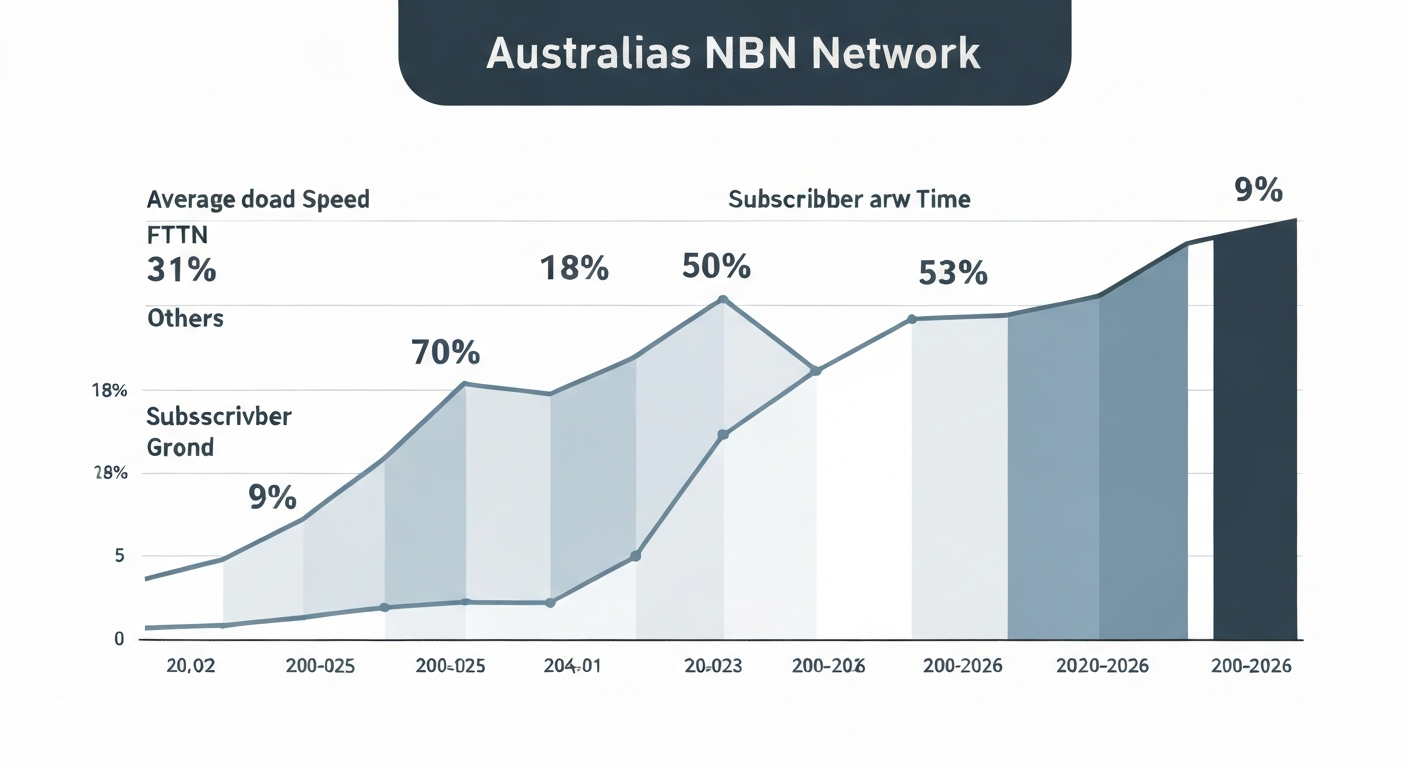
NBN connections by type
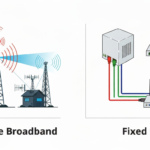
The NBN uses a mix of technologies to connect Australian homes and businesses. As of early 2026, the breakdown is roughly:
| Connection type | Premises connected (approx.) | Share |
|---|---|---|
| FTTP (Fibre to the Premises) | ~4.5 million | ~36% |
| FTTN (Fibre to the Node) | ~3.8 million | ~31% |
| HFC (Hybrid Fibre Coaxial) | ~2.4 million | ~19% |
| FTTC (Fibre to the Curb) | ~0.9 million | ~7% |
| Fixed Wireless | ~0.5 million | ~4% |
| Satellite (Sky Muster) | ~0.15 million | ~1.2% |
FTTP’s share is growing rapidly. Over 594,000 premises were upgraded to FTTP under NBN Co’s Fibre Connect program through December 2024, with more than 217,000 of those upgrades completed in the first half of FY2025 alone. A joint $3.8 billion investment between NBN Co and the federal government is targeting upgrades of the remaining FTTN premises to FTTP by 2030.
Total NBN services in operation
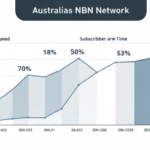
As of the end of 2025, there are approximately 9.1 million active NBN services in Australia — representing the vast majority of Australian homes and businesses that have access to the network. Around 78% of premises passed by the NBN are actively connected.
NBN speed tier adoption
How Australians are choosing to connect tells an interesting story about what people actually need:
| Speed tier | Share of residential services |
|---|---|
| NBN 100 | ~51% |
| NBN 50 | ~22% |
| NBN 25 and below | ~8% |
| NBN 250 | ~11% |
| NBN 1000+ | ~8% |
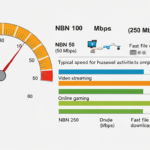
NBN 100 is by far the most popular tier, chosen by around half of all residential subscribers. The share on NBN 250 and NBN 1000 is growing steadily as more premises gain FTTP access — you can’t access these faster tiers on FTTN connections.
Average NBN speeds
The ACCC’s Measuring Broadband Australia program tracks real-world performance. Key findings from its most recent report (April 2026):
- NBN 100 plans: Average download speeds of 93–97Mbps during evening peak hours — providers are generally delivering close to what’s advertised
- NBN 1000 plans: Average download speeds of 880–891Mbps in real-world testing
- Latency: Median latency on fixed-line NBN plans is around 8–15ms, with significant variation between providers
- Best-performing providers for latency: Exetel (avg ~7ms peak), Superloop (~8.7ms peak), Aussie Broadband (~10ms peak)
NBN pricing trends
NBN plan pricing has become more competitive over the past few years as providers compete for market share. Rough averages as of May 2026:
| Speed tier | Average monthly cost (unlimited data) |
|---|---|
| NBN 25 | ~$50/month |
| NBN 50 | ~$65/month |
| NBN 100 | ~$79/month |
| NBN 250 | ~$95/month |
| NBN 1000 | ~$121/month |
NBN complaints and satisfaction
The Telecommunications Industry Ombudsman (TIO) received around 93,000 complaints about internet services in the 2024–25 financial year — a decline from the peak years of the NBN rollout but still significant. The most common complaint categories are:
- Service quality issues (slow speeds, dropouts)
- Billing and contract disputes
- Connection delays and missed appointments
Smaller providers like Aussie Broadband and Superloop consistently receive far fewer complaints per subscriber than the major telcos. The ACCC publishes quarterly complaint ratios that are worth checking when choosing a provider.
NBN data usage
Average monthly data consumption per NBN service has grown substantially year on year, driven by streaming video in higher resolutions and working from home. Current average monthly data usage per active NBN service is around 450–500GB — roughly double what it was five years ago. Unlimited data plans have become essentially universal as a result.
How does Australia’s broadband compare internationally?
Australia has historically ranked poorly in international broadband speed comparisons — partly because the multi-technology mix approach meant a large portion of premises were on copper FTTN connections with capped speeds. The ongoing FTTP upgrade program is improving Australia’s position. As of the Ookla Global Index for Q1 2026, Australia ranks around 50th globally for median fixed broadband download speed — up from the 60s range a few years ago. There’s still significant room to improve as FTTP upgrades continue.
We cover the international comparison in more detail in our article on Australia’s internet speed rankings globally.
Key takeaways
- The NBN FTTP upgrade program is accelerating — FTTN is being phased out
- NBN 100 remains the most popular speed tier, but faster tiers are growing as FTTP expands
- Real-world performance on NBN 100 plans is close to advertised speeds — providers have improved significantly from the congestion issues of 2019–2021
- Smaller, specialist ISPs outperform the major telcos on speed consistency and complaint ratios
- Average data consumption continues to grow, reinforcing the value of unlimited data plans
Compare NBN Plans
Ready to find a better deal? Our best NBN plans page is updated monthly with the most competitive offers from Australian providers. You can also use our plan finder to get a personalised recommendation based on your household size and usage, or compare providers head-to-head to see how they stack up on price and customer ratings.